
FICA Compliance for South African Startups: What You Need to Know
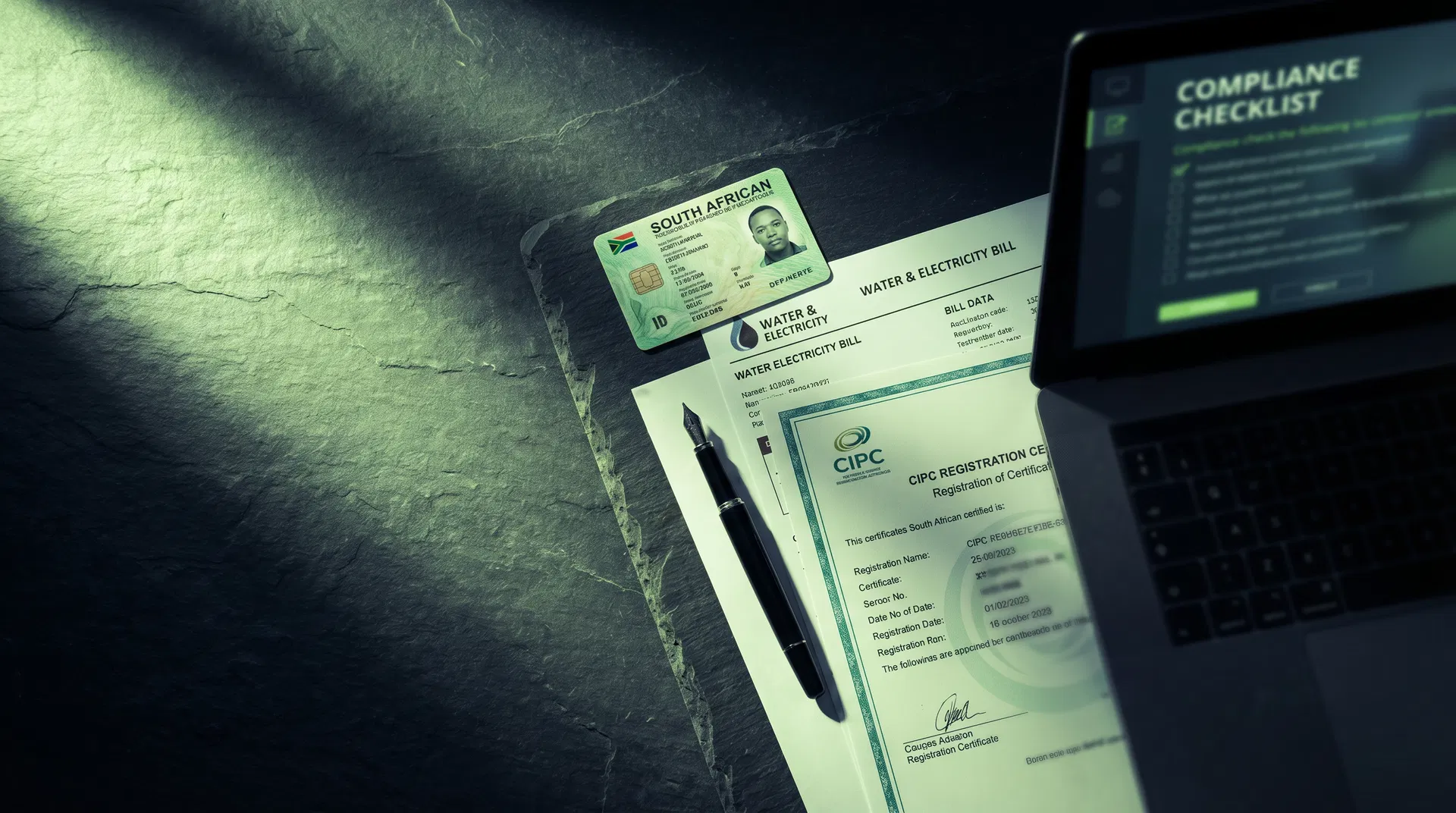
FICA compliance is one of the most common causes of delays in opening a business bank account in South Africa. The Financial Intelligence Centre Act (FICA) requires banks to verify the identity of all customers and the beneficial ownership of all business entities. Understanding the requirements upfront saves significant time and frustration.
What FICA Requires
FICA requires banks to implement a Know Your Customer (KYC) process that verifies:
- The identity of all directors and beneficial owners — anyone who owns 25% or more of the business
- The registered address of the business — verified against CIPC records
- The nature of the business — what the business does and its primary sources of revenue
- The source of funds — where the money in the account comes from
These requirements have been significantly strengthened since 2023, following South Africa's greylisting by the Financial Action Task Force (FATF) in 2023.
Documents Required for FICA Compliance
For the Business
- CIPC registration documents — CoR14.3 (certificate of incorporation) and CoR15.1A (memorandum of incorporation)
- Proof of business address — a utility bill, lease agreement, or rates account in the company's name, not older than three months
- SARS income tax reference number — confirmation of registration with SARS
- VAT registration certificate — if the business is VAT-registered
For Each Director and Beneficial Owner
- Certified copy of South African ID — certified by a commissioner of oaths, not older than three months
- Proof of residential address — a utility bill or bank statement, not older than three months
- For foreign nationals — certified copy of passport and proof of legal residence in South Africa
Common FICA Mistakes That Delay Account Opening
1. Outdated Documents
Banks require documents that are not older than three months. Many founders arrive with documents that are six or twelve months old. Check the dates on all documents before your appointment.
2. Uncertified Copies
ID copies must be certified by a commissioner of oaths (a police officer, attorney, or notary public). Photocopies without certification are not accepted.
3. Address Mismatch
The address on your proof of address must match the address in your CIPC records. If you have recently moved, update your CIPC records before applying for a bank account.
4. Missing Beneficial Ownership Information
If your company has shareholders who own 25% or more of the shares, the bank will require FICA documents for each of them — even if they are not directors. Many founders overlook this requirement.
5. Complex Ownership Structures
If your company is owned by another company (a holding company), the bank will require FICA documents for the directors and beneficial owners of the holding company as well. This can significantly extend the account opening process.
The FATF Greylisting Impact
South Africa was greylisted by the Financial Action Task Force in February 2023, which means South African banks are subject to enhanced scrutiny from international correspondent banks. This has resulted in:
- More stringent FICA requirements across all banks
- Longer account opening timelines
- More frequent requests for additional documentation
- Enhanced due diligence for certain types of transactions
South Africa has made significant progress in addressing the FATF concerns, and the greylisting status is expected to be reviewed in 2025. However, the enhanced compliance requirements are likely to remain in place regardless of the outcome.
How to Prepare for FICA Compliance
- Gather all documents before your appointment — do not arrive at the bank without complete documentation
- Certify all ID copies the day before your appointment — certifications expire after three months
- Check your CIPC records — ensure your registered address and director information is current
- Prepare a business description — a one-page summary of what your business does, its revenue model, and its primary customers
- Be prepared for follow-up requests — even with complete documentation, banks often request additional information
The Bottom Line
FICA compliance is not optional and it is not going away. The most effective approach is to treat it as a project — gather all required documents, certify everything, and arrive at your bank appointment with a complete package.
The investment of two to three hours in preparation will save you the frustration of multiple return visits and a delayed account opening. Most account opening delays are caused by incomplete documentation, not by the bank's processes.